



An executive-level synthesis for leaders navigating Skoll Week
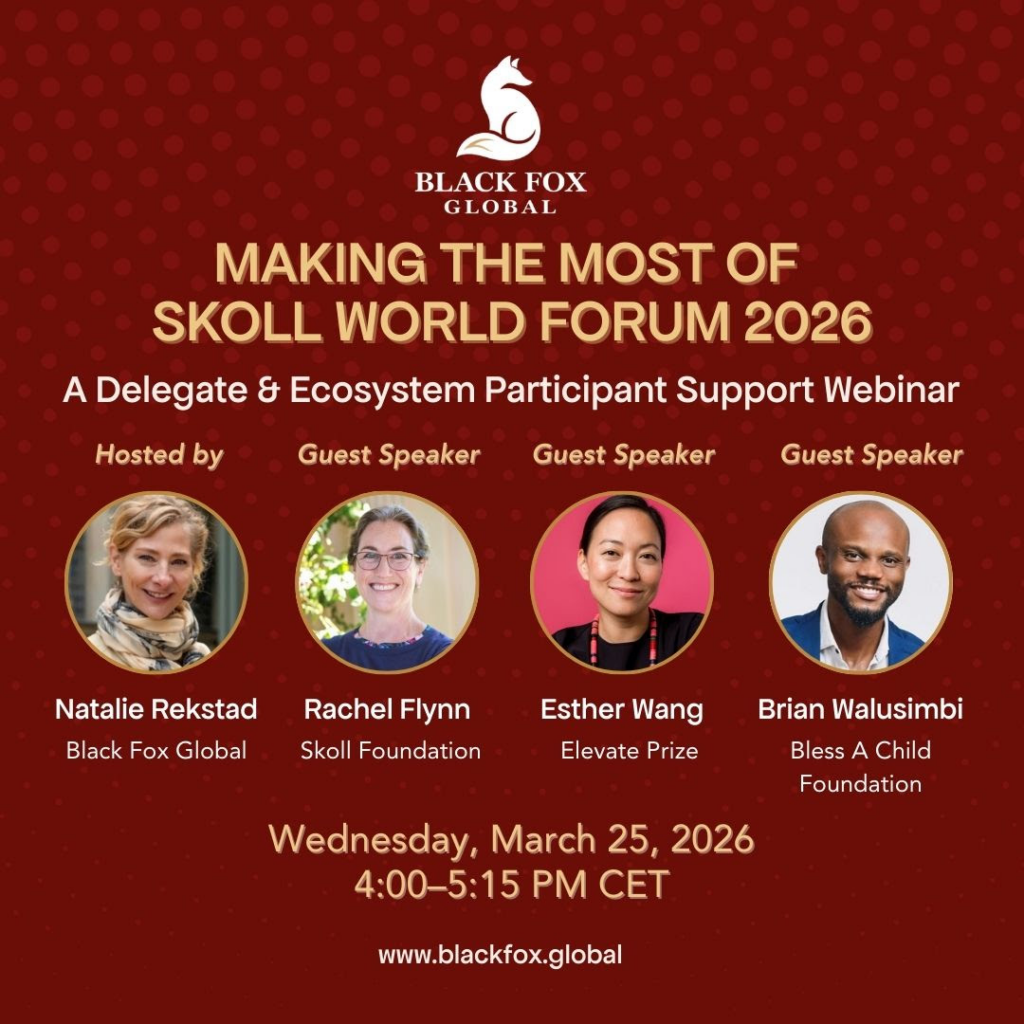
Ahead of Skoll World Forum 2026, Black Fox Global convened a live orientation webinar for delegates and ecosystem participants — bringing together four practitioners, each offering a distinct vantage point inside the Skoll ecosystem.
This Field Guide is the distillation of that session: an executive-level resource designed to help you navigate Skoll Week with clarity and intention. The guidance was shaped by four voices:
- Rachel Flynn, Skoll Foundation — Funder
- Esther Wang, Elevate Prize Foundation — Network Builder
- Natalie Rekstad, Black Fox Global — Strategist
- Brian Walusimbi, Bless a Child Foundation — Practitioner
Together, they offered a multi-dimensional perspective on how Skoll actually works — on the ground, in real conversations, across power dynamics, and over time. The guidance that follows was tailored based upon the questions posed during the registration process, half of whom will be first-timers to Skoll Week.
🎬 We’re happy to share the video upon request, noting the quality is compromised.
And because we love you so very much (and believe in being exceptionally well-prepared), you’ll find a far more comprehensive guide here: “The Unofficial Guide to the “#SkollWF” | Black Fox Global | Maximizing Attendance at Skoll World Forum 2026
A Note from Black Fox Global
Skoll World Forum is not just a convening. It is an entire global ecosystem; one shaped by an unusually high density of relationships, capital, and ideas. Which is what makes it extraordinary. And which is also what can make it feel overwhelming.
This Field Guide is not about “doing Skoll right.” It’s about helping you find your way through it in a way that is aligned, human, and sustainable — maybe even regenerative.
If You Read Nothing Else, Read This
- Get clear. Know your why. Embodiment matters — come as worthy and sovereign. (Natalie)
- Manage your expectations before you arrive — talk to stakeholders, reduce the pressure, and come ready to sow seeds. (Brian)
- There is no one way to do Skoll. Give yourself grace. You’re looking for the people for whom there is a spark — not everybody. Trust that what is yours will find you. (Esther)
- Prioritize five to ten deeply right connections over thirty scattered ones. Personalize every outreach — even one sentence changes everything. And ask your existing funders to open doors. (Rachel)
- Do the internal work. You belong. You are enough. You are not there as a beggar — you are offering people the chance to come alongside extraordinary work. (Brian)
- You are not pitching. You are exploring alignment between equals. Be findable. Use the virtual platform — it’s a hidden superpower. (Natalie)
- The Forum is the beginning of the conversation — not the close. Plant seeds. Follow up. The harvest comes later. (Rachel)
- Read the room. Be direct with those whose job it is to give — and human with everyone else. Fill your cup, not just your calendar. (Esther)
- Plan the before, the during, and the after. Build your Triple-Five List. And always carry someone with you. (Brian)
- Leave time and space for serendipity. You never know who someone knows, what board they sit on, where they used to work. (Rachel)
- This is not your only once-in-a-lifetime opportunity. Pace yourself. The relationships you build here will unfold over years. (Esther)
- Protect your energy. Trust the arc. This is a long game. (Natalie)
Survival Tip | What Each Wished They’d Known at Their First Skoll
Rachel Flynn: “How much walking I was going to do. I did not pack the right shoes. I only made that mistake once.”
Esther Wang: “Go in with a plan to take care of yourself, including sleeping well before the big week. Fear of missing out is real – but plan how you’ll know when to rest.”
Brian Walusimbi: “Pack warm clothes, my friends! You never know with Oxford … don’t make my mistake!”
Natalie Rekstad: “A lot of other people also felt like they had their nose pressed to the glass. I was not an outsider; I was just early in finding my place in the community.”
____________________________________________________________________________
For the full Field Guide, Read On!
____________________________________________________________________________
The Landscape: What You’re Entering
Skoll World Forum 2026 at a glance:
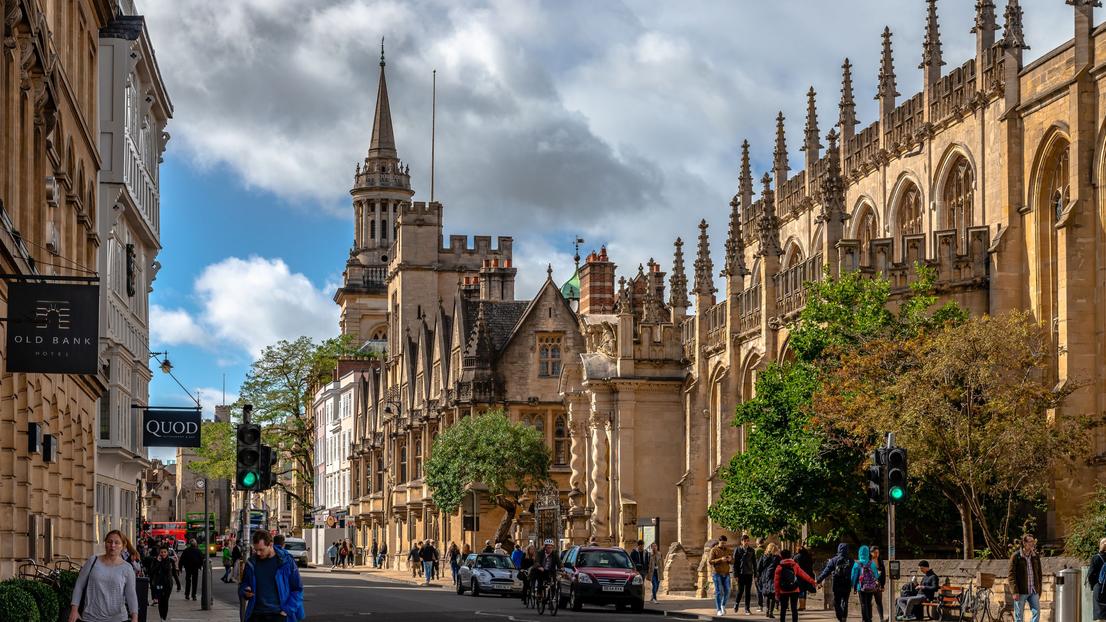
- ~1,600 official delegates, invitation-only, based primarily at Saïd Business School (SBS) and New Theatre, Oxford
- ~350 funders among delegates: ~200 institutional (foundations, impact investors, corporate), ~100 individual philanthropists, ~50 advisors and intermediaries
- ~50% of funders are attending for the first time — they are navigating it just like you
- Additional funders and principals are in Oxford for side meetings and events, not registered as official delegates
- Three parallel tracks: The Forum program (invitation-only), independent events (Marmalade Festival and Sidebar — free and open to the public), and private events and meetings
2026 Forum Schedule Highlights:
- Monday–Tuesday: Side convenings; Skoll portfolio gathering; Registration opens Tuesday afternoon
- Wednesday–Thursday: Core programming at Saïd Business School and New Theatre; morning and afternoon blocks with intentional open time in mornings and mid-day
- Wednesday evening: Opening plenary + College dinners
- Thursday afternoon: Skoll Awards ceremony — Do Not Miss – Watch from New Theatre or at the Watch Party for ecosystem participants at SBS
- Friday: Closing midday (new this year) — closing plenary mid-morning, closing lunch to follow
Part I: The Strategist’s Lens — Identity as Foundation of Success
Natalie Rekstad, Black Fox Global
Before your words. Before your credentials. Before even the most carefully crafted messaging — there is something more foundational at work: your energetic signature.
At Black Fox Global, we can support the external architecture — meeting choreography, narrative excellence, strategic positioning. But none of it holds if what you are transmitting underneath is contraction, urgency, or extraction.
People don’t respond first to what you say. They respond to how you show up.
Humans are keenly attuned to nonverbal signals: posture, tone, eye contact, presence — and these can communicate more truthfully than language. If you are grounded and open, trust emerges without effort. If your orientation is grasping, it will be felt.
So the real question is not what will you say when you get there. It is: What will people feel in your presence?
Get grounded in your purpose. What would make this week truly meaningful? What kinds of conversations actually matter? Who are you hoping to meet — and more importantly, why? Clarity is not just strategic. It is identity-based. When your identity is anchored in sovereignty and worthiness, you enter every conversation from a far more powerful place.
“Take your full space in the room, in Oxford, in the world. You bring tremendous value to the spaces you occupy. Own that.”
Articulate why this work is uniquely yours to do. Not just what your organization does — but why you are the one doing it. This is what builds trust, conviction, and emotional resonance. We call this Crafting Your Why, and it is some of the most important preparation you can do.
Set a daily intention. For over twelve years, at conferences mine has been: May I go where I am needed most. I also move through these spaces with intentional energy that conveys: I am for you. I am for your success. There’s no stickiness to that. No grasping, no agenda. It allows me to show up in genuine delight — and delight is magnetic.
Make yourself findable before you arrive.
- Post on LinkedIn that you’re attending (#SkollWF) and use the social badge
- Signal what you’re working on and what you care about
- Reach out with intentional personalization through LinkedIn and the Skoll app — before Forum week begins
- Pro tip: Sign up for the Virtual Skoll World Forum even if you’re attending the ecosystem events in person. It’s free, open-access, and gives you a backchannel into the entire ecosystem — including the ability to message official in-person delegates.
Be memorable. You want people to recognize you, remember you, and reconnect with you. Wear something distinct. A statement piece — bold earrings, stunning colors, striking shoes, a jacket that says something about who you are. Being distinctive equals recall, and recall equals opportunity. I have two ongoing friendships that trace directly to a pair of gold shoes I posted on LinkedIn before Skoll. Tarana Burke of #MeToo once beelined across a room to ask about my red vinyl feminist bomber jacket. That was the beginning of a continuing conversation.
“Serendipity at Skoll isn’t always accidental — it’s strategic. The magic comes from how you show up, where you place yourself, and whether you lead with curiosity and generosity.”
Protect your energy — especially introverts. Do not over-schedule. Do not default to obligation. Your no is as important as your yes. Leave space for magic, for serendipity, for self-care. Your energy is an asset. Protect it like one.
A note on Friendship Friday: by the end of the week, you will likely be depleted. Schedule time with friends on Friday. Learn from my hard-won experience on this one.
Part II: The Funder’s Lens — What Funders Are Actually Navigating
Rachel Flynn, Director of Funder Alliances, Skoll Foundation
“There is this sort of lore that people are running around Oxford with their checkbooks… in fact, the Forum is just one week on the calendar and relationships take time and trust.”
“It is a magical and joyous and inspiring week — but it’s also part of a much longer arc.”
Understanding what funders are actually there for changes everything about how you engage with them.
Why funders come to Skoll — in their own words:
- To connect with their peers. Philanthropy is navigating an extraordinarily challenging moment, and Skoll is one of the rare spaces where funders can be with each other — to learn, share, and explore informal and formal collaboration.
- To reconnect with and support organizations they already fund. Skoll is an efficient way for funders to check in with multiple portfolio organizations without crisscrossing the globe.
- To meet new organizations aligned with their strategy.
Not every funder in Oxford is in all three modes at once. Some are not in a sourcing moment. Some are not the decision-maker at their institution. Pay attention not just to where someone works, but to their title and role — that tells you a great deal about whether and how to engage.
Before you reach out: Do the research. It may take a few hours, but invest them. A few minutes on a foundation’s website can tell you whether your work is genuinely aligned — saving both parties time and preserving your credibility. Prioritize five to ten deeply right connections over thirty scattered ones.
“Think about the seeds that you can plant… and how you can continue to water them beyond the week in Oxford.”
Outreach that actually works: Both LinkedIn and the Skoll app are worth using — but with intention. Mass messaging is obvious and rarely compelling. One additional sentence of genuine personalization — a mutual connection, a session you’re both excited about — can make a real difference.
If you’re reaching out cold, don’t lead with a meeting request. Try a lighter ask instead: “Is there a session you’re excited about where I might find you and say hello?” or simply, “I hope we have a chance to connect.” You’d be amazed how often you encounter the same people in Oxford — a warm hello you’ve prepared for goes much further than a cold pitch request.
Use your existing funders. A warm introduction from a mutual peer is far more likely to be answered than a cold message. Ask the funders who already know and support your work: “I’m going to be in Oxford. Here are seven people also attending who I’d love to meet. Do you know any of them? Could you make an introduction?” Organizations that already have your back can help you reach the next door.
On office hours: We advise funders to consider holding open office hours rather than back-to-back individual meetings — carving out two hours in Collaboration Café at SBS to take conversations in an efficient, accessible way. Consider doing the same. Consolidating your own meeting blocks, rather than switching between panels, meals, and meetings, supports both efficiency and psychological health.
“A funder who connected… made a significant grant that took almost 12 months.”
Skoll is the beginning of so many partnerships — not the close. Stories of meaningful grants, lasting friendships, and deep collaborations trace their origin to a walk between venues, a college dinner, a chance conversation waiting in line. That twelve-month grant started with a hello.
“People have so much to offer… you never know who somebody knows, what board they sit on.”
Bring that spirit. And please — share your success stories with us, big or small. They nourish the whole ecosystem.
Part III: The Practitioner’s Lens — Navigating an Elite Space with Confidence
Brian Walusimbi, Bless a Child Foundation, Uganda
“I had been to many conferences, but this was different — people wanted to know who I was.”
Skoll is shaped by power. Who has access. Who feels like they belong. How people move within that. Acknowledging this is not cynicism — it is clarity. And clarity is how you navigate with confidence.
“By the second day I had lost my voice… manage your energy really well.”
Brian’s framework is simple and battle-tested: Plan the before. Plan the during. Plan the after.
Before you arrive:
Manage expectations — with yourself, and with whoever is supporting your attendance. You might come back with a major funder. You might come back with seeds planted and nothing yet harvested. Both are valid. Both are part of the arc.
“I’m going to sow a seed, I’m just going to start a relationship — and watch where this journey goes.”
This mindset does something practical: it removes the energy of neediness from your presence. You’re not there as a beggar. You are looking for a partner. You are giving people an opportunity to come alongside extraordinary work. Come with that knowledge.
Do the internal work before you arrive. Know that you belong. Know that you are enough.
The Triple-Five List: Brian comes to every Skoll with fifteen people in mind.
- Five must-meets: Your highest-priority, most aligned targets. Try to schedule these in the mornings when energy — yours and theirs — is highest.
- Five connectors: People who can extend your Skoll experience long after Friday. Connectors send emails, make introductions, open doors months later. Find them deliberately.
- Five new friends: Not funders. Not prospects. Just remarkable humans doing important work. Every year, some of Brian’s most meaningful relationships have started here.
Move in a pack. Find two to three trusted peers and carry each other’s work into every meeting. When a funder can’t fund you, they may be the right fit for someone you’re carrying. When one of Brian’s five friends heard about an early-morning foundation meeting, they knocked on doors at 3am to pull their people together — and all of them ended up funded. Carry someone with you.
Do not sit with people you already know. Venture out at meals and receptions. Sit next to someone unfamiliar. Ask about their work, their families, who they are — before you share anything about yourself. “What do you do?” will come. Let connection come first.
Practical notes from the field: Oxford in April can be cold, rainy, and very walkable. Pack layers. Pack an umbrella. Pack comfortable shoes. Arrive early to theater events — lines are long and seats fill fast. Find accommodation close to the action — late-night side events are many and far-flung.
Part IV: The Network Builder’s Lens — Turning Access into Relationship
Esther Wang, Elevate Prize Foundation
“You do have choices about how you want to navigate… there is no one way to do Skoll.”
The pressure many people feel going into Skoll is real — and often proportional to how much they care. But it can also distort your presence. Before you arrive, spend a moment asking yourself: What is my orientation this year? What do I actually have capacity for? What would make this week feel like enough?
“Give yourself some grace… you’re not going to do everything exactly right.”
Everyone comes in differently. Introverts and extroverts need different strategies. People with kids at home, with health concerns, with funding crises mid-forum — all navigating something. The invitation is to know yourself well enough to navigate accordingly.
“You’re not looking for everybody — you’re looking for the people for whom there is a connection or a spark.”
When you’re standing in front of someone for the first time, you often have ninety seconds to feel whether something is there. If it isn’t — politely move on. If it is — lean in. You can often tell quickly whether someone is there in a transactional professional mode (be direct, be efficient, they’ll appreciate it) or whether they’re a person on the street who wandered in out of curiosity and might just become a champion you never expected.
“They’re excited to meet you… and want to know more.”
There will be people at Skoll who are genuinely honored to hear about your work. Not every conversation needs to lead somewhere strategic to matter. Skoll can drain you — and it can also fill your cup. The human moments of being seen, appreciated, and in community with people who understand why this work matters: don’t skip those.
On silence from funders: Not responding to your LinkedIn message or app outreach doesn’t mean no. It often means not yet, or not this week. Your name and organization are in front of their eyes. That is not nothing. Persistence — thoughtful, non-desperate persistence — does matter.
On FOMO: At any given moment at Skoll, there will be three to five places you feel you should be. You will not be at all of them. That is normal. Make peace with it before you arrive.
Physical care is a strategy. Sleep before you go. Eat. Drink water. Bring electrolytes and vitamins. Protect your voice. Step outside with someone if you want a real conversation — the side events are loud. Destroying yourself for a week of connection is not worth it when you have to catch up on everything the week after.
“This is not your only once-in-a-lifetime opportunity… there will be other moments.”
Skoll is a long game. The relationships seeded in Oxford take root over months and years. Give yourself the grace of knowing that whatever you plant this year — with care, with curiosity, with your full human presence — is enough.
After Skoll: What Comes After the Magic
“After the ecstasy, the laundry.” — Zen proverb, as cited by Natalie Rekstad
The Forum is the beginning, not the end. The follow-up is where the seeds become something.
- Within 48 hours: Send warm, personalized notes to those you connected with. Reference something specific from your conversation.
- For missed connections: A LinkedIn message or email: “We were both in Oxford but our paths didn’t cross — I’d love to explore our shared vision around…” is a legitimate and often well-received opening.
- Track your commitments: Who said what, what you promised to send, who offered to make an introduction. Honor all of it.
- Share your stories. With the Skoll Foundation, with your own community. The stories of what actually happened in Oxford — the unexpected conversations, the planted seeds, the surprising connections — matter. They feed the ecosystem.
The Skoll Foundation: A Moment of Transition
The Skoll Foundation enters 2026 in its own moment of transformation. New CEO Marla Blow is stepping into her role as Jeff Skoll re-engages with the Foundation’s work. The Foundation has reaffirmed its focus in three areas:
- Preventing deforestation through land tenure for Indigenous Peoples and local communities (Amazon Basin, Congo Basin, Indonesia)
- Strengthening global health systems through community health workers (East Africa, South Asia)
- Expanding economic opportunity through smallholder agriculture and girls’ education
The Foundation is also evolving its operations, moving its headquarters to Washington, D.C., while retaining a smaller Bay Area presence. Jeff Skoll and the Foundation remain committed to the Forum, the Skoll Awards, and social entrepreneurs as a force for sustainable impact.
The Forum will continue to be hosted in Oxford.
Skoll World Forum 2026: Field Guide & Ecosystem Brief was produced by Black Fox Global. For questions or to explore how we support leaders with strategic fundraising support, visit blackfox.global. If you’re ready to unlock what’s next in your funding, let’s start the conversation here.
Our sincere appreciation to Rachel Flynn, Brian Walusimbi, and Esther Wang for their time, perspective, and invaluable contributions. You can also find session host Natalie Rekstad here.
We look forward to seeing you in Oxford!
2026 Forum dates: April 21–24, 2026
2027 Forum dates: April 6–9, 2027
ADDITIONAL RESOURCES:
Session Slide Deck SWF2026 ORIENTATION WEBINAR
“The Unofficial Guide to the “#SkollWF” Black Fox Global | Maximizing Attendance at Skoll World Forum 2026
Black Fox Global | Open Source Fundraising Handbook 2026 Fundraising Handbook
Black Fox Brief | Curated News & Resources for Sector Leaders. Sign up to receive the 2026 Skoll World Forum Edition in your inbox.